Alabama Army National Guard Graduates Six New Chaplains
Release #2010042301
Related Media
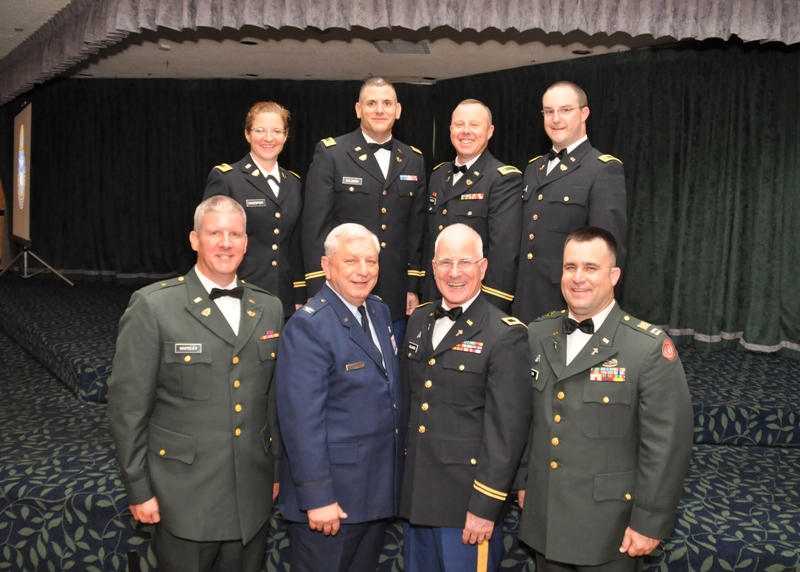
Chaplain photo
MONTGOMERY, AL (04/23/2010)(readMedia)-- As the Alabama National Guard continues its efforts in support of the war on terror, the need for chaplains continues to rise as well. Currently, only 18 chaplains are assigned to the 11,000 plus Soldiers and family members of the Alabama Army National Guard, leaving 13 empty slots waiting to be filled. For Air Force Col. Robert Hicks, full time support chaplain for the Alabama National Guard, the need for chaplains grows with every crisis.
"There is something always going on," said Hicks. "We have at least one crisis a week in the Alabama Army Guard." Hicks says that growing the Chaplain's Corps is a critical issue. "We need more people to do the ministry for our Soldiers."
Things are looking up for the Alabama Army Guard's Chaplain's Corps however. Recently, six chaplain candidates graduated from the Army's Chaplain Training School at Fort Jackson, S.C. Once the candidates graduate from seminary school, they will be able to take their place among the ranks as chaplains in the Alabama Army Guard. Until then, the candidates will serve under the supervision and guidance of a chaplain, learning from their experiences on how to do ministry in the Guard.
2nd Lt. Edward Solomon, a recent graduate from the Army's Chaplain Training School, says that there is such a critical need for chaplains now due to the high stress of deployments. "Sometimes a Soldier or family member just needs someone to talk to," said Solomon. "And it is our purpose, as chaplains, to minister to the Soldiers and their families, and to let them know that someone is there to listen and that their issues or problems are valid, no matter what they are."
Hicks says that one of the main things he tries to instill into the new chaplains is the importance of being out with the Soldiers. "It is important for these chaplains to learn about the units and the Soldiers they are assigned to," said Hicks. "It's called ministry of presence. If you're attached to a fighter wing, then know the difference between an F16A model and a F16C model." Hicks explained that getting to know a unit, its Soldiers and their jobs can break down barriers of communication.
"We're not here for them just to come to us," said 2nd Lt. James "Mike" Chitwood, a chaplain candidate. "We must get to know them and what they are about so we can better facilitate their needs."
Another barrier chaplains face is the difference in people's faiths. Hicks says a chaplain has to be the chaplain to the whole unit regardless of the flavor, be it Baptist, Catholic, protestant or even atheist. "During chaplaincy school, we were all thrown into the mix; rabbis, priests, protestants, Methodists and many others," said Hicks. "But, through that process, we all got to know and respect each other as people." Hicks says it's true pluralism and it is a strength that the military chaplaincy models for the rest of the world.
-30-
Photo / 1st row pictured from left to right is 2nd Lt. Jon Whitley, Col. Robert Hicks, State Chaplain Col. Coy Hallmark and Capt. Robert Baylis. 2nd row pictured from left to right is 2nd Lt. Meredith Davenport, 2nd Lt. Edward Solomon, 2nd Lt. Adam Cochran and 2nd Lt. James "Mike" Chitwood. Whitley, Baylis, Davenport, Solomon, Cochran and Chitwood are all recent graduates from the Army's Chaplain Training School located at Fort Jackson, S.C. Once the chaplain candidates have finished their seminary schools, they will take their place among the ranks as new chaplains in the Alabama Army National Guard.


Recent News
- Alabama National Guard deploys explosive ordnance disposal company
- Alabama National Guard plans flyovers to salute COVID-19 response efforts
- Alabama National Guard conducts disinfection operations at Bill Nichols State Veterans Home
- Alabama National Guard to disinfect long-term care facilities
- Alabama National Guard dispels misinformation on mobilization rumors
- Pelham Readiness Center Ribbon-Cutting Ceremony
- Alabama National Guard conducts armory ribbon-cutting ceremony in Florence
- Alabama Army National Guard pilot 2019 Veteran of the Year
- Florence Readiness Center Ribbon-Cutting Ceremony
- Alabama National Guard hosts armory ribbon-cutting ceremony in Tuskegee
...more