

Reduce Solar Gain and Your Annual Cooling Bill
Make the Most of Your Air-Conditioning System
Related Media
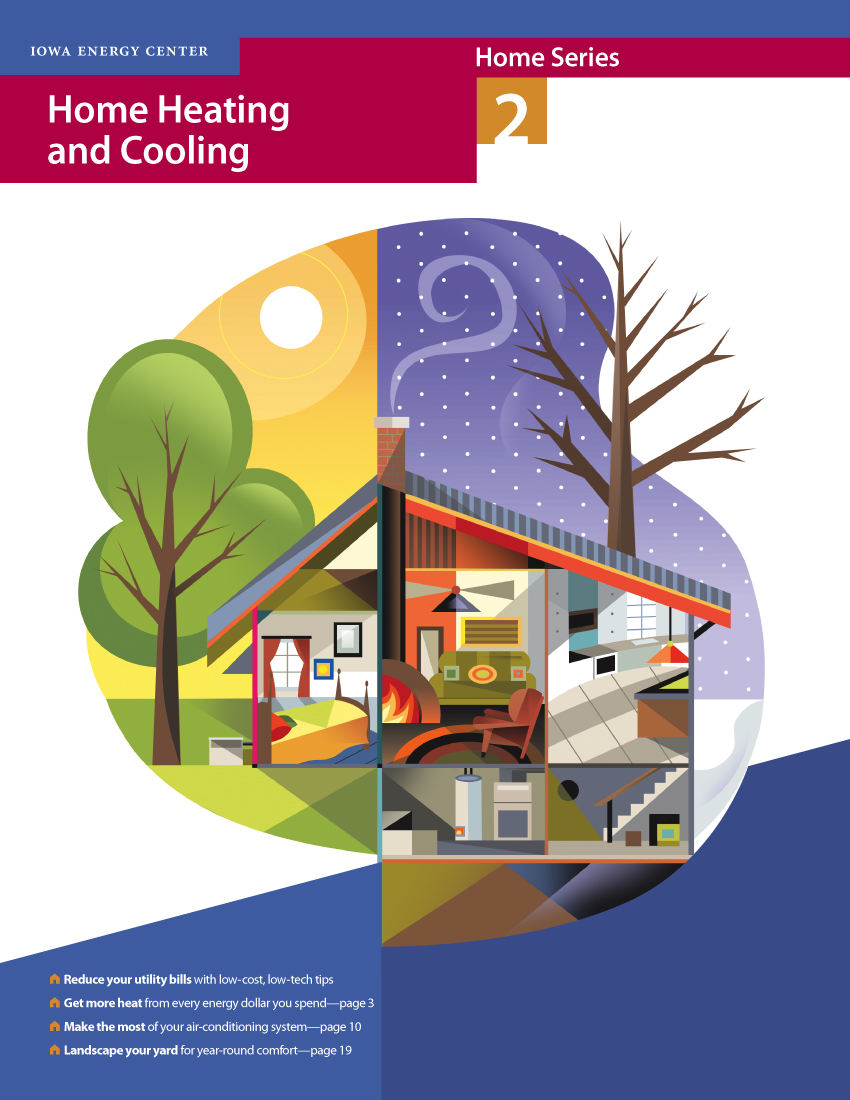
Home Series 2 book cover
AMES, IA (07/08/2009)(readMedia)-- During Iowa's hot, humid summers, about half of the heat that accumulates in a home comes from solar gain; the other half comes from air leaks and heat-producing activities inside the home. The time you spend reducing or eliminating conditions that add heat (and humidity) to your home will be well spent; the smaller the difference between the temperature outside and the temperature inside, the lower your annual cooling bill.
Take a tour of your home with the following list in hand, to discover what you can do to save energy and cut utility costs.
- Shade south and west windows to keep out the solar heat. Stopping the sun's warmth before it gets into your home with awnings or exterior solar screens is best. If that's not possible, close inside blinds and curtains during the day; light colors will reflect the most heat. As an alternative, apply tinted plastic sun-control films or reflective coatings to the inside of your windows.
- Keep the doors and windows closed during the day. But on cool, low-humidity nights, open the windows and use natural ventilation (with or without fans) to cool your home.
- Construct a sunshade over a concrete patio. A concrete slab will become a large heat sink during summer months, reflecting sunlight and radiating heat into your house. A shading structure will solve both problems, as well as making the outdoor space more usable on hot days.
- If you're building a room addition, keep cooling in mind. Besides adequately insulating and weatherizing the new space, add 24-inch (or wider) overhangs to shade windows on the sunny sides of the new room. Also ask your contractor if your present cooling system can handle the additional load; if not, consider an energy-efficient supplemental system.
- Cover pots and pans on the cooktop or stove. Cooking creates lots of heat and humidity, so contain it as much as possible.
- Run your dishwasher late at night. Start the dishwasher when you go to bed. If it has a timer, set the dishwasher to run during non-peak hours in the middle of the night.
- Check the temperatures in the refrigerator and freezer. The temperatures should run 38 to 40 degrees in the refrigerator and 0 to 5 degrees in the freezer. Setting colder temperature levels wastes energy and makes these heat-producing appliances run too often.
- Use exhaust fans in the kitchen and bathrooms. Vent steam and heat from cooking to the out-doors, and reduce humidity by running the fan while you're in the shower. However, don't let either one run too long, or they'll pull cooled air out of your entire house.
- Dry clothes on an outdoor clothesline. Wet clothes on an indoor clothesline will add humidity to your home and increase the load on your air-conditioning system.
(Sidebar)The material in this article was adapted from Home Heating and Cooling, a book published by the Iowa Energy Center. Besides offering more details on the topics discussed here, this publication also covers energy-saving home improvement projects that may be eligible for rebates from local utility companies and federal income tax credits.
To get a free copy of this book:
- Download a PDF copy at the Iowa Energy Center Web site: http://www.energy.iastate.edu/;
- Request a copy by e-mailing the Iowa Energy Center at iec@energy.iastate.edu; or
- Call the Iowa Energy Center at 515-294-8819 to ask for a copy to be sent to you by mail.
Iowa Energy Center
Amy Myers, 515-294-8819


Recent News
- Reduce Solar Gain and Your Annual Cooling Bill
- Iowa Energy Center Recommends How to Buy a Room Air Conditioner
- Geothermal Heat Pump System Accredited Installer Training
- Optimize Compressed Air Systems and Increase Industry Profits
- Thrifty Tip: Regular Air-Conditioner Maintenance Equals Lower Energy Costs
- Funding for Energy-Related Conferences Available
- Create an Energy-Saving Landscape
- Geothermal Heat Pump System Accredited Installer Training
- Reduce the Wind Chill in Your House
- Is It Time To Buy New Appliances?
...more

