

Bronxites to NYSDOT: Glad You Know How to Engage Buffalo Residents… What About Us?
Only 10 Bronxites showed up to the first in-person public hearing for the Cross Bronx environmental review, compared to hundreds at Buffalo's well-advertised Route 33 hearing
Related Media
WhatsApp_Image_2025-12-03_at_13.20.22.jpeg
-
 WhatsApp_Image_2025-12-03_at_13.20.23.jpeg
BRONX, NY (12/15/2025) (readMedia)-- As the State Department of Transportation plans for the future of the Cross Bronx and Route 33 Expressway in Buffalo, state officials have adopted completely different styles of community engagement for New York families entering the busy holiday season. Last week, NYSDOT held its final Cross Bronx public hearing, marking the last opportunity for Bronxites to jointly review plans with officials before the project moves to construction in 2026. After advocating for stronger outreach and more time to assess the environmental impacts of the remaining Cross Bronx construction plans, Bronx residents are meeting resistance from officials while Buffalo residents receive the type of accommodations Bronxites are seeking.
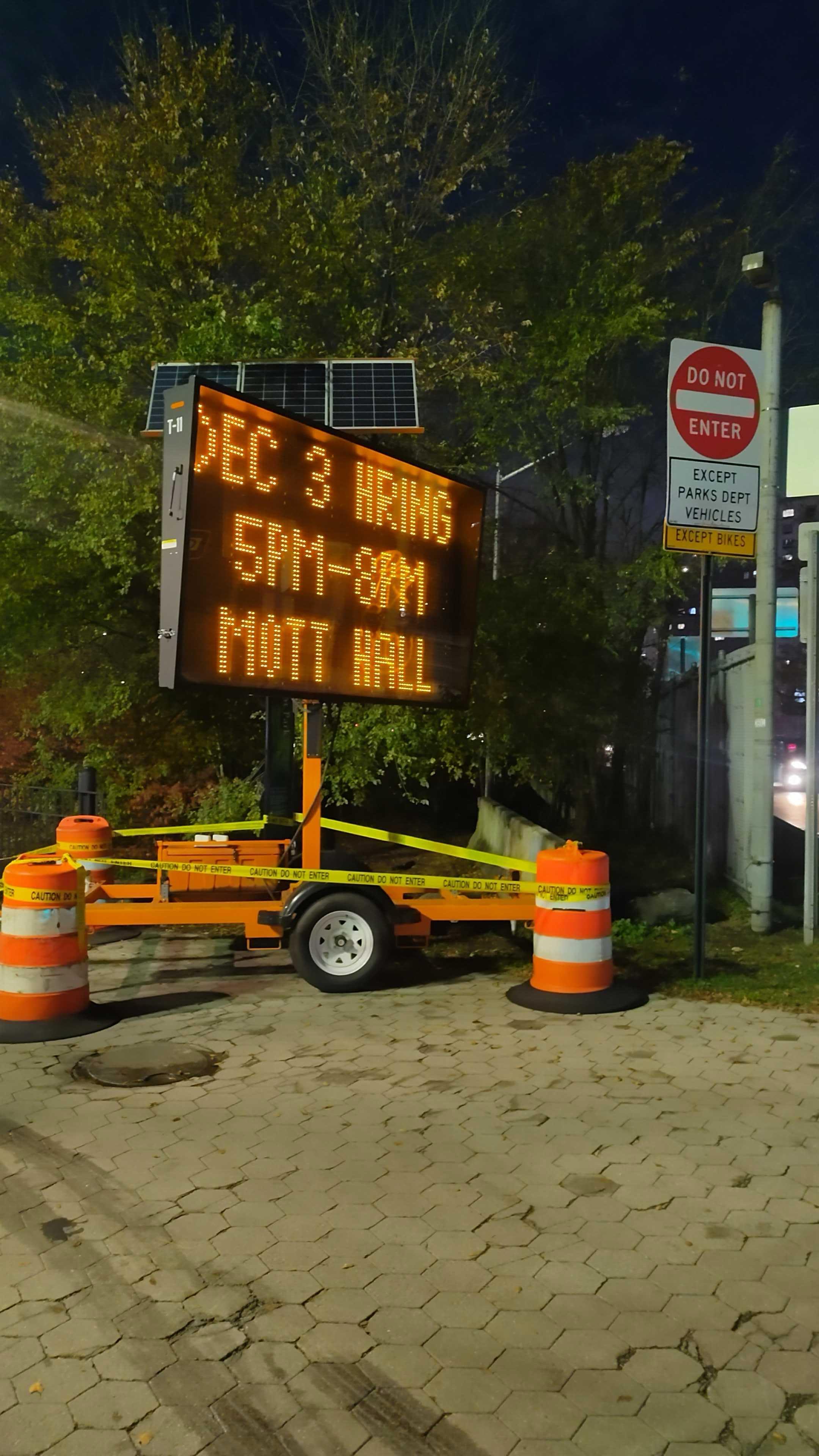
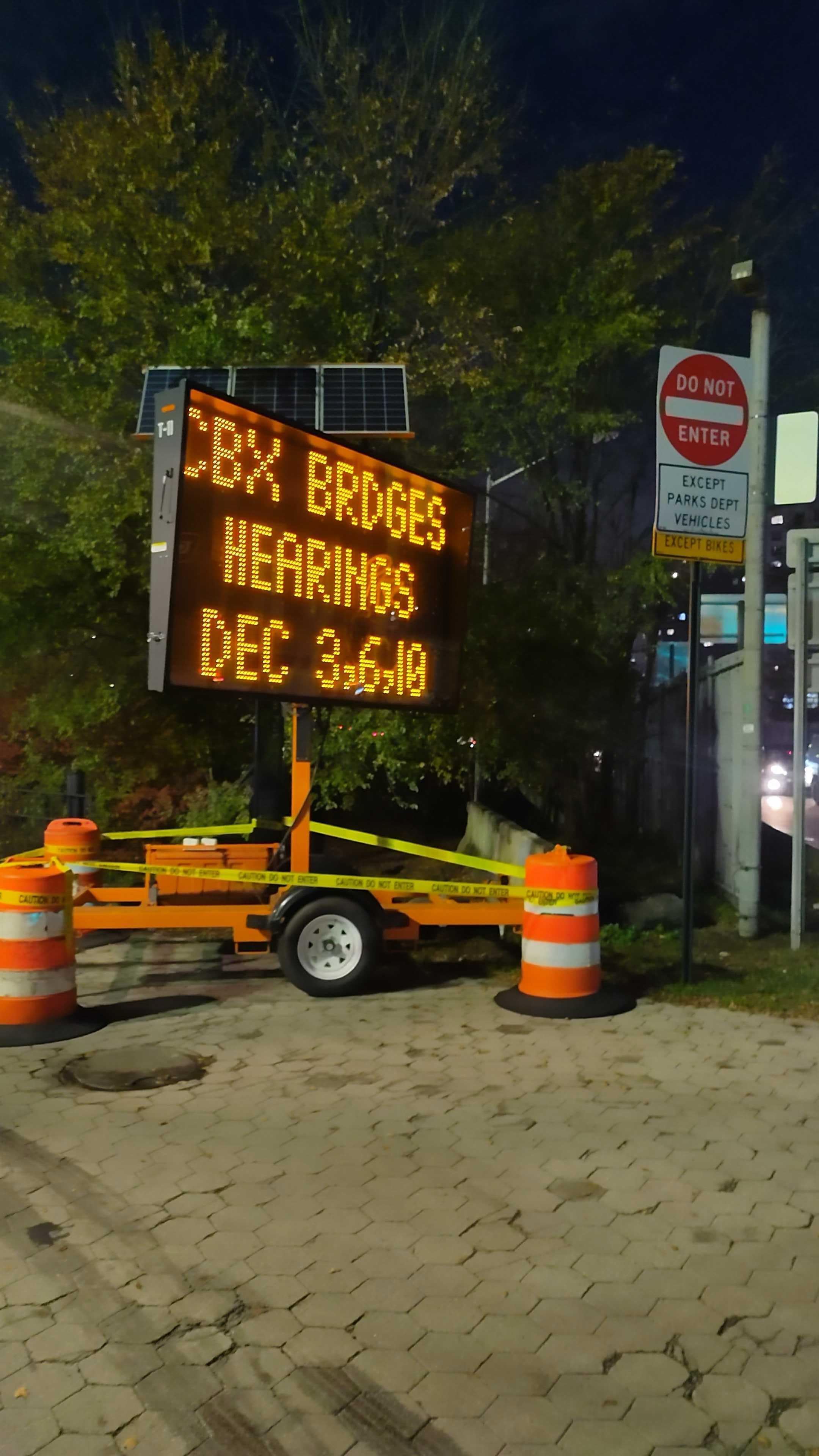
View photos of NYSDOT's Cross Bronx engagement strategy below featuring makeshift digital road signs directing Bronxites to the agency's scheduled hearings.
Kicking off the Buffalo project's first public listening session on Dec 2nd, NYSDOT Commissioner Dominguez committed to "partner[ing] with the community to help lay a foundation for the future," before a crowd of hundreds of Western New York residents. On the same day, NYSDOT announced the launch of its Queen City Forward website, a new dedicated online hub aimed at engaging the community in creating a brighter transportation future.
But just a day later, an agency representative balked at the idea of giving Bronxites more time to weigh in on the Cross Bronx, at the first official public hearing for the project's environmental review phase. This response comes after NYSDOT's minimalist engagement approach: posting its public hearing schedule on two digital road signs along the Cross Bronx. According to NYSDOT, despite releasing its nearly 6,000 page assessment right before Thanksgiving and leaving community members 31 weekdays to review, expanding the public comment deadline to January 9th with several major holidays in between constitutes a "full engagement process." While Buffalo and Western NY residents showed up in droves to the Route 33 hearing, only 10 Bronxites managed to attend the first Cross Bronx hearing.
In response, Siddhartha Sánchez, Executive Director of the Bronx River Alliance and member of the Stop the Cross Bronx Expansion Coalition issued the following statement:
"While NYSDOT gave Buffalo residents a robust welcome and launched a dedicated website for their input, Bronxites got digital road signs and a nearly 6,000-page document dropped right before Thanksgiving. We're not asking for special treatment, just the same genuine engagement that Western New York is receiving – even more critical because we are at a final decision point for what happens with the Cross Bronx Expressway. Thousands of Bronxites are currently missing out on the chance to shape a project that will impact our health and neighborhoods for generations. Our community deserves more than 31 weekdays to weigh in on the future of the Cross Bronx."
Bronx electeds have already joined forces with local residents and community advocates calling for an extended Cross Bronx public comment period. Ahead of the Thanksgiving holiday, Senator Gustavo Rivera, Councilmember-elect Justin Sanchez, Bronx River Alliance, Transportation Alternatives, and a coalition of Bronx community groups and citywide advocates led a virtual press conference requesting a 90-day public comment period and stronger outreach to source meaningful feedback from busy residents. A week later, Congressman Ritchie Torres sent a letter to Governor Hochul and the New York State Department of Transportation echoing community voices and urging officials to extend the public comment period.
BACKGROUND
The New York State Department of Transportation is currently proposing the Cross Bronx "5 Bridges Project," a $900-million plan (including $150 million of federal funding for reconnecting communities harmed by highways) that threatens to exacerbate environmental inequities facing the South Bronx. Despite heeding community concerns and scrapping four of its most noxious plans - including a new mile-long polluting roadway - Governor Hochul and NYSDOT are not reducing traffic and are still proposing expanding the overall width of the Cross Bronx by at least 24 feet.
The Stop the Cross Bronx Expansion Coalition is urging NYSDOT and Governor Hochul to conduct the needed standard bridge repair without expanding the highway, and work with community members toward more equitable, environmentally just traffic and air quality solutions for the corridor.
Why Expanding the Cross Bronx Isn't Viable
The Cross Bronx's enormous environmental footprint has only worsened over the years. In the U.S., fossil fuel-powered vehicles are a major source of air pollution and heat-trapping emissions, releasing more than 50% of the nitrogen oxide found in our air. Nearly 150,000 vehicles, including 18,000 trucks, use the Cross Bronx daily, a figure that will increase if state DOT proceeds with its planned expansion of the structure.
In 2022, NYSDOT illegally dumped pieces of the roadway directly into the Bronx River after demolishing a Cross Bronx entrance ramp during a similar rehabilitation project. Even if the state files permits, local residents are still concerned that DOT's project may similarly impact the river, under the current "5 Bridges" project. Thanks to sustained remediation efforts, wildlife has slowly returned to the river following the incident, including threatened birds such as herons and dolphins. But during ongoing river clean-ups with local volunteers, residents continue to find construction waste tossed from the expressway into the recovering waterway. State DOT's remaining plan threatens to reverse this hard-won progress and drive worsened air quality, increased pollution, and more chronic illness in an already overburdened community.
Community Alternatives for the Cross Bronx
Since the 1970s, community members have long advocated for investment in safe, dignified, and simple improvements for South Bronx neighborhoods. Residents successfully advocated for the expansion of Starlight Park, which has doubled in size after years of organizing to transform the space into a vital community resource. But existing east-west corridors along the Cross Bronx, including some of its most dangerous intersections on 174th Street, 177th Street, and East Tremont Avenue have been ignored and neglected for decades.
In 2014, City Council awarded NYCDOT the funds to create signalized crossings at five intersections around E 177th St. and E Tremont Ave. Over a decade later, the project still hasn't broken ground, depriving local residents of accessible pathways. The state's planned expansion ignores proposed connections along the highway, in a departure from residents' top priorities. As outlined in the community's visioning process for the Cross Bronx, Bronxites are seeking alternatives that reduce traffic, restore community access to green space, and reconnect riverside neighborhoods along the expressway.
About Bronx River Alliance: The Bronx River Alliance serves as a coordinated voice for the river and works in harmonious partnership to protect, improve and restore the Bronx River corridor so that it can be a healthy ecological, recreational, educational and economic resource for the communities through which the river flows.
###
Bronx River Alliance
Adaku Nwokiwu, (347) 455-8121, adaku@pythiapublic.com


Recent News
- Lawmakers, Advocates Urge Albany To Crack Down on Social Media Scams Costing NYers Billions
- ZOOM: Bronxites to Rally for Stronger Community Protections, As Cross Bronx Expansion Looms
- JCRC-NY Condemns Last Night's Harassing, Intimidating Protest Targeting Jewish Community in Midwood, Brooklyn
- Sweet Truth Act Passes Assembly Health Committee, Next Up Codes Committee
- NEW: SUNNY Act Passes Assembly Energy Committee, Bringing New York One Step Closer To Embracing Solar Power!
- NYS Senate Passes Urgent Fix to CVA and ASA to Ensure Survivors in NY Can Access the Justice They Deserve
- As Governor Hochul Guts Climate Law, 250+ Rally with State Lawmakers: End Plastic Pollution Now
- As Governor Hochul Guts Climate Law, 250+ Will Rally with State Lawmakers: End Plastic Pollution Now
- As Governor Hochul Guts Climate Law, 250+ Will Rally with State Lawmakers: End Plastic Pollution Now
- As Governor Hochul Guts Climate Law, 250+ Will Rally with State Lawmakers: End Plastic Pollution Now
...more

