

Michael Bernstein Compares Great Depressions of 1929 and 2008 in Lebanon Valley College Presentation
Bernstein will discuss depressions on Thursday, Feb. 2 at 11 a.m. in Zimmerman Recital Hall
Related Media
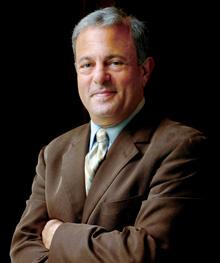
Michael Bernstein will discuss "American Economic Decline: Comparing the Great Depressions of 1929 and 2008" at Lebanon Valley College
-
 Bernstein is provost, senior vice president for academic affairs, and professor of history and economics at Tulane.
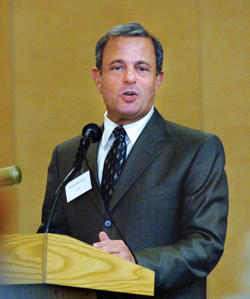
ANNVILLE, PA (01/18/2012)(readMedia)-- Michael Bernstein, senior vice president for academic affairs and provost at Tulane University, will discuss "American Economic Decline: Comparing the Great Depressions of 1929 and 2008" on Thursday, Feb. 2 at 11 a.m. in the Zimmerman Recital Hall of the Suzanne H. Arnold Gallery at Lebanon Valley College. Bernstein's talk is part of the College's Colloquium Series on MONEY.
Also a professor of history and economics, Bernstein's teaching and research interests focus on the economic and political history of the United States, macroeconomic theory, industrial organization economics, and the history of economic theory. His publications connect political and economic processes in modern industrial societies, as well as explore the interaction of economic knowledge and professional expertise with those processes as a whole. Bernstein has published four volumes: "The Great Depression: Delayed Recovery and Economic Change in America, 1929-1939," "Understanding American Economic Decline," "The Cold War and Expert Knowledge: New Essays on the History of the National Security State," and "A Perilous Progress: Economists and Public Purpose in Twentieth Century America."
A former Fulbright Scholar at Christ's College (Cambridge University), Bernstein has held numerous research grants, such as those from the Herbert Hoover Presidential Library Association and the Economic History Association. In addition, he has been an Andrew Mellon Fellow at the National Humanities Center and has held a Residency Fellowship at Sophia University (Tokyo) under the joint auspices of the Organization of American Historians and the Japanese Association for American Studies.
MONEY is a year-long integrated series of guest speakers, roundtable discussions, films, and courses that consider society's idea of money. It will involve presentations on problems such as unemployment, poverty, and the gender wage gap, as well as discussions on tax policy, the job market and entrepreneurship, and finally a theoretical consideration of the very idea of money, the ideology of the free market, and the morality and theology of capitalism.


Recent News
- LVC Athletics Celebrates Student-Athletes' Athletic and Academic Achievements
- Lebanon Valley College Athletes Named to Spring Sportsmanship Teams
- Lebanon Valley College Student-Athletes Named Academic All-District
- LVC Softball's Holly Grube Named an All-American
- Lebanon Valley College Students Attend Conference
- Michael De Falcis Named Regional Field Athlete of the Year
- Lebanon Valley College Track & Field Athletes Achieve All-America Honors
- LVC Student-Athletes Earn All-Region Accolades
- Lebanon Valley College Student-Athletes Earn All-Conference Honors
- Lebanon Valley College Recognizes Spring Student-Athletes
...more

