"The Money Show" Considers Value of Money in Performance at Lebanon Valley College
H. Peter Steeves of DePaul University to present show March 21 at 7 p.m. in Leedy Theater
Related Media
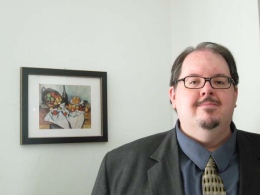
H. Peter Steeves will present "The Money Show" at Lebanon Valley College on March 21.
ANNVILLE, PA (03/05/2012)(readMedia)-- H. Peter Steeves of DePaul University will present "The Money Show," a performance including live music, dance, theatre, demonstration, and lecture to explain the value of money. The free show will be March 21 at 7 p.m. in Leedy Theater of the Mund College Center at Lebanon Valley College. The presentation is part of the College's Colloquium Series on MONEY.
In an abstract describing "The Money Show," Steeves asks, "How is it that a dollar comes to have value? How is it that a paper dollar bill comes to have value? How is it, for that matter, anything comes to have value?"
"There is a phenomenology to valuing-a particular structure to the way in which consciousness engages the world in order to see things in varying degrees of worth," he continues. "And when it comes to money, a better understanding of this phenomenology is imperative.
"'The Money Show' offers an attempt to found a phenomenology of valuing and a deconstructive theory of money, all while using performative elements... In a space that brings together aesthetics and economics, the relationship between art and value will also be explored in terms of currency (for, after all, each and every bill and coin is a little work of art)."
During the show, several lucky audience members will be paid, and all attendees will find their money fluctuating in value. "You will leave this performance richer-and not just intellectually," Steeves writes. "So grab that cash with both hands and make a stash at "The Money Show!'"
MONEY is a yearlong integrated series of guest speakers, roundtable discussions, films, and courses that consider society's idea of money. It will involve presentations on problems such as unemployment, poverty, and the gender wage gap, as well as discussions on tax policy, the job market and entrepreneurship, and finally a theoretical consideration of the very idea of money, the ideology of the free market, and the morality and theology of capitalism.


Recent News
- LVC Athletics Celebrates Student-Athletes' Athletic and Academic Achievements
- Lebanon Valley College Athletes Named to Spring Sportsmanship Teams
- Lebanon Valley College Student-Athletes Named Academic All-District
- LVC Softball's Holly Grube Named an All-American
- Lebanon Valley College Students Attend Conference
- Michael De Falcis Named Regional Field Athlete of the Year
- Lebanon Valley College Track & Field Athletes Achieve All-America Honors
- LVC Student-Athletes Earn All-Region Accolades
- Lebanon Valley College Student-Athletes Earn All-Conference Honors
- Lebanon Valley College Recognizes Spring Student-Athletes
...more